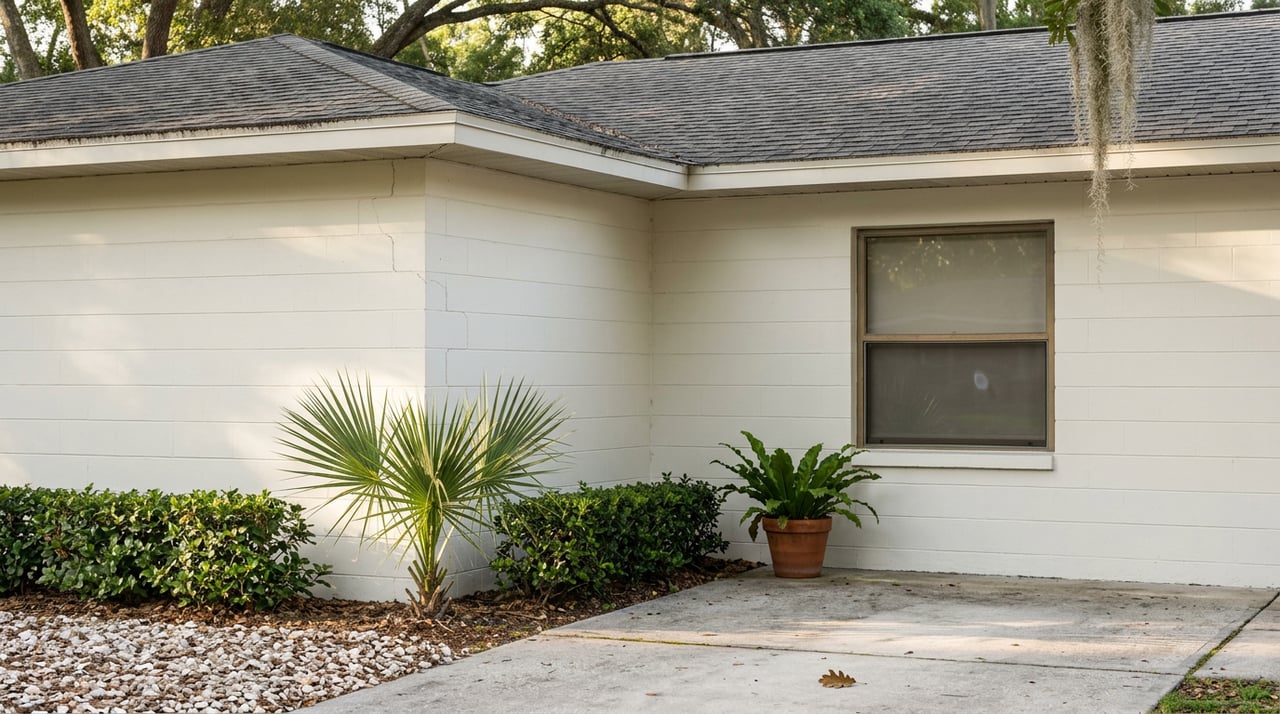
The Decade Your Gulf Breeze Proper Home Was Built Matters More Than Its Age
A seller in old Gulf Breeze gets a strong offer, then a message from the buyer's lender: the home is over thirty years old, so a four-point inspection is required before the policy can be written. The seller's stomach drops a little. Thirty years sounds like a problem waiting to be found.
Then the report comes back, and the buyer's insurance agent quotes the 1962 concrete block ranch for less than the agent would have quoted a wood-frame house built in 1985, three streets over. The seller assumed age was the variable that mattered. It isn't, not directly. Florida insurers don't price a home on a straight line from year built to premium. They price the construction era, and in Gulf Breeze Proper those eras sit right next to each other on the same block.
Carriers underwriting Gulf Breeze homes weigh each construction cohort against its own claims record, not against a simple age cutoff. That's why a 1960s concrete block ranch can land a better quote than a 1980s wood-frame house down the street, even though the frame house is technically younger, and why anything built to the post-2002 Florida Building Code tends to document best on a wind mitigation inspection almost regardless of style. Concrete block construction from the early 1960s has held up well against decades of Gulf Coast storms. Some of the faster frame construction from the building boom decades has not aged as evenly.
That distinction matters for anyone pricing or marketing a home in Gulf Breeze Proper, because the neighborhood was never built in one wave. It was built in several, and they're stacked close together.
The peninsula's older core dates to a specific moment. The Pensacola Bay Bridge opened in 1960, Gulf Breeze incorporated as a city in August 1961, and the streets between Highway 98 and Santa Rosa Sound filled in with 1950s and 1960s concrete block ranches soon after. A local roofing contractor who has worked the peninsula for nearly 40 years describes the older neighborhoods on the south side near Shoreline Park and the bayfront streets to the north as mostly 1960s through 1980s ranch homes with modest 4:12 to 6:12 roof pitches.
Move east and the eras change. Whisper Bay and Villa Venyce, the canal-front neighborhoods, added waterfront homes spanning the 1960s through the 1990s. Past the Naval Live Oaks reserve, Tiger Point grew up around its golf course mostly between the 1970s and 1990s, with taller pitches and more roof complexity than the older core. Tiger Trace's brick ranches date to the mid-1990s. None of this is trivia. It's the reason two homes a five-minute drive apart, both described on a listing sheet as simply Gulf Breeze Proper, can land in very different places on an insurance quote.
| Building era | Where you'll find it | What it typically means at underwriting |
|---|---|---|
| 1950s to 1960s concrete block | Old peninsula core, south toward Shoreline Park | Often insures well once roof and panel are updated |
| 1960s to 1990s canal-front | Whisper Bay, Villa Venyce | Waterfront adds a wind and flood conversation on top of the era conversation |
| 1970s to 1990s golf-course | Tiger Point | Spans several decades within one subdivision |
| Mid-1990s brick ranch | Tiger Trace | Newer systems, but not automatically post-2002 code |
| Post-2002 | Scattered infill and newer builds | Documents best on wind mitigation almost regardless of style |
A four-point inspection isn't a home inspection. It's a narrow report on four systems, roof, electrical, plumbing, and HVAC, that exists purely for the insurer's underwriting file. It documents age, condition, and material. It doesn't advise anyone on repairs.
Most carriers still trigger one at the 30-year mark, and a home over 40 years old will almost certainly need one before a new carrier will write a policy. Some carriers, Citizens included, still ask at 20 years, though the hard 20-year cutoff that used to be universal has loosened as the Florida market has softened. A standalone four-point runs $75 to $150 in most Florida markets, and pairing it with a wind mitigation inspection at the same visit usually costs less than booking the two separately.
Four-point reports on this peninsula tend to flag the same names again and again: Federal Pacific and Zinsco electrical panels, aluminum wiring, and polybutylene plumbing, all treated as automatic red flags by most carriers regardless of which decade produced them. None of these are unique to Gulf Breeze Proper, but knowing your home's era tells you which of these to check for before a buyer's inspector finds it first.
Ask an insurer what actually generates the most claims on this peninsula and the answer isn't hurricanes. It's water from inside the house. Failed supply lines, aging water heater tanks, washing machine hoses, and AC condensate lines leak quietly inside 1960s and 1970s built homes far more often than storm surge ever touches them. Carriers treat that kind of interior water damage very differently from one another. Some sell the coverage back generously, some cap it, and a few exclude it outright when a home's plumbing or claims history raises a flag, which is a real reason the exact same Gulf Breeze house can quote far apart across the market depending on which carrier looks at it.
The insurance backdrop for older Gulf Breeze homes isn't static. Citizens Property Insurance, the state-backed insurer of last resort, has been handing Santa Rosa County back to the private market at a fast clip: the county had 5,218 personal residential Citizens policies at the end of 2024 and 1,206 by May 31, 2026, a roughly 77 percent drop in seventeen months as private carriers absorbed that business. Statewide, Citizens fell from 936,182 policies at the start of 2025 to about 395,144 by early January 2026, and continued falling to roughly 293,772 policies by May 31, 2026.
That shift means more private carriers are actively competing for the exact kind of older, coastal-adjacent housing stock that fills Gulf Breeze Proper, a different underwriting environment than sellers may remember from two or three years ago. Citizens is also phasing in a requirement to carry flood coverage alongside wind coverage on many of its policies through January 1, 2027, and Florida's 15-year roof rule prevents insurers from denying coverage solely because a roof has crossed that age, provided a licensed inspector confirms at least five years of useful life remain. For a peninsula where a lot of roofs are approaching or past that mark, that rule changes what's negotiable and what isn't.
Order the four-point and wind mitigation inspections before you list, not after an offer arrives. A clean report becomes a marketing asset you can point to directly. If either report turns up something, you're the one setting the terms of that conversation instead of reacting to a buyer's lender. Keep permits and receipts for any panel, wiring, roof, or plumbing work done over the years, since documented updates are what move a home out of its era's default risk profile.
Ask what era the systems were last touched, not just what year the home was built. A 1960s concrete block home with an updated panel and a newer roof can be a stronger insurance position than a newer-looking frame house from a rougher building decade. If you're looking at a canal lot in Whisper Bay or Villa Venyce, or a water-adjacent parcel in Tiger Point, price flood coverage as its own line item early, since it's never bundled into a standard homeowners policy no matter how the listing describes the view.
Does a new roof solve an older Gulf Breeze Proper home's insurance problem on its own? Not by itself. A new roof helps the wind mitigation credit, but an original electrical panel or aluminum wiring from the same era can still complicate coverage even with a brand new roof overhead.
Is Tiger Point automatically cheaper to insure than the older core of Gulf Breeze Proper? Not automatically. Tiger Point itself spans several decades of construction, from 1970s golf-course-era homes to newer builds closer to the Navarre boundary, so the same era-over-neighborhood logic applies inside Tiger Point as it does across the rest of the peninsula.
Do I still need a separate flood policy if my homeowners policy covers wind? Yes. Flood coverage in Florida is always a separate policy or endorsement, and Citizens is now phasing in a requirement to carry it alongside wind coverage on affected policies through January 1, 2027.
If you're deciding whether to list an older Gulf Breeze Proper home now or comparing what a specific decade of construction actually buys you before making an offer, Luxpoint Real Estate can walk the era-by-era differences with you street by street. Contact Us.
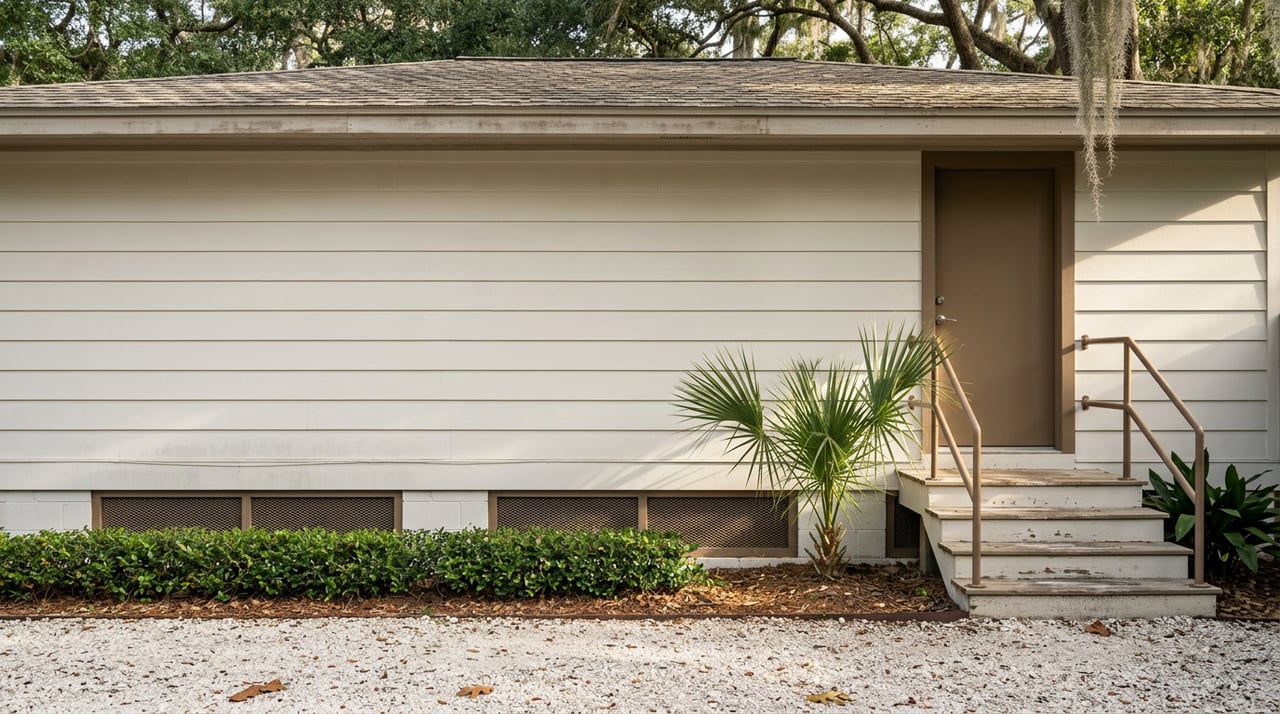

Defined by market expertise and a refined, results-driven approach, each client receives tailored guidance aligned with their goals. Every decision is supported by insight, strategy, and local knowledge of Gulf Breeze and Florida’s coastal market. The focus remains on delivering clarity, confidence, and measurable results.
Luxpoint Real Estate
913 Gulf Breeze Pkwy Ste 4 Gulf Breeze FL 32561